

A spirit level is used to determine whether a surface, object, or structure is perfectly horizontal (level) or vertical (plumb). It's essential for tasks like hanging shelves, installing tiles, building walls, aligning furniture, and setting up equipment accurately.
A spirit level is used in a wide range of professional and everyday tasks where precise alignment matters. Builders rely on it to ensure walls, floors, and frames are perfectly plumb or level. Photographers and videographers use it to align tripods and cameras. Interior designers and homeowners use it when hanging artwork, installing cabinetry, or laying flooring. In essence, any task where an object must be straight — horizontally or vertically — calls for a spirit level. Modern digital spirit levels, like those available as iPhone apps, extend these capabilities with features like target angle modes, AR camera views, and Apple Watch integration, making precision available in a portable format.
What Is a Spirit Level Used For? Your Questions Answered
Whether you're a seasoned builder or a first-time DIYer, chances are you've encountered a spirit level — that flat tool with a small bubble floating inside a liquid-filled vial. Simple in appearance, but surprisingly powerful in practice.
So, what is a spirit level used for? In short: determining whether a surface or object is perfectly horizontal (level) or vertical (plumb). But that one-line answer doesn't capture how many situations — from hanging a picture frame to constructing a multi-storey building — depend on getting this right.
In this complete guide, we answer the most common questions people ask about spirit levels:
- What tasks actually require a spirit level?
- What are the different types of spirit levels and when do you use each?
- Which trades and professions rely on them most?
- Can a smartphone app really replace a traditional bubble level?
- What features should you look for in a digital spirit level?
Looking for a practical overview, or keen to understand the full range of professional applications? This guide covers both. We'll also look at how apps like LevelPro bring precision, calibration, and thoughtful design together — right on your iPhone or iPad.
What Tasks Actually Require a Spirit Level?
Understanding what a spirit level is used for becomes much clearer when you look at the full range of real-world tasks that depend on accurate alignment. Those tasks span everything from five-minute home fixes to multi-week construction projects — and the common thread is always the same: precision matters.
Hanging Shelves, Frames, and Cabinets
Most homeowners first reach for a spirit level here. Even a half-degree tilt on a shelf becomes immediately obvious once items are placed on it. For hanging shelves or picture frames, a reliable level is the difference between a result you're satisfied with and one you'll re-do on the weekend.
- Picture frames and artwork — small misalignment is instantly visible on a flat wall
- Floating shelves — unlevel shelves cause objects to slide and look visually wrong
- Kitchen and bathroom cabinets — doors won't hang correctly if the carcass isn't plumb
Construction and Structural Work
In professional construction, a spirit level is used at almost every stage of a build:
- Laying foundations — an unlevel foundation compounds errors through every subsequent layer
- Setting wall frames and studs — plumb walls are essential for structural integrity
- Installing windows and door frames — out-of-plumb frames cause sticking doors and gaps
- Pouring concrete slabs and screeds — drainage and finish quality depend on precise gradients
- Roofing and pitched surfaces — consistent pitch angles ensure correct water runoff
Tiling, Flooring, and Landscaping
Tiles laid on an unlevel surface will crack under pressure and look uneven. Flooring that isn't true will creak, warp, and wear faster. In landscaping, patios and pathways need controlled gradients to direct water away from structures. All of these jobs call for a spirit level at every stage — not just at the start.
Photography, Videography, and Equipment Setup
Creatives rely on spirit levels more than you might expect. Photographers use bubble levels on their tripod hot shoes to ensure a straight horizon — critical for architecture and landscape shots. Videographers need level camera rigs to avoid an unintended tilt in their footage. Setting up a projector, monitor, or satellite dish correctly also requires careful leveling.
Furniture Assembly and Appliance Installation
- Washing machines and refrigerators — unlevel appliances vibrate excessively and wear faster
- Pool tables and billiard tables — even a fraction of a degree changes how a ball rolls
- Freestanding furniture — bookcases and wardrobes must be plumb to avoid tipping
The One Rule That Applies to Every Task
No matter the scale — from mounting a TV bracket to pouring a foundation — an accurate level reading at the start prevents expensive corrections later. Getting the job done right the first time isn't just good practice; it's what separates a clean result from an avoidable redo.
For those working across multiple scenarios, a digital level that covers both tubular and bullseye measurement modes in a single tool is more practical than carrying multiple physical levels for different jobs.
Which Trades and Professions Use a Spirit Level Most?
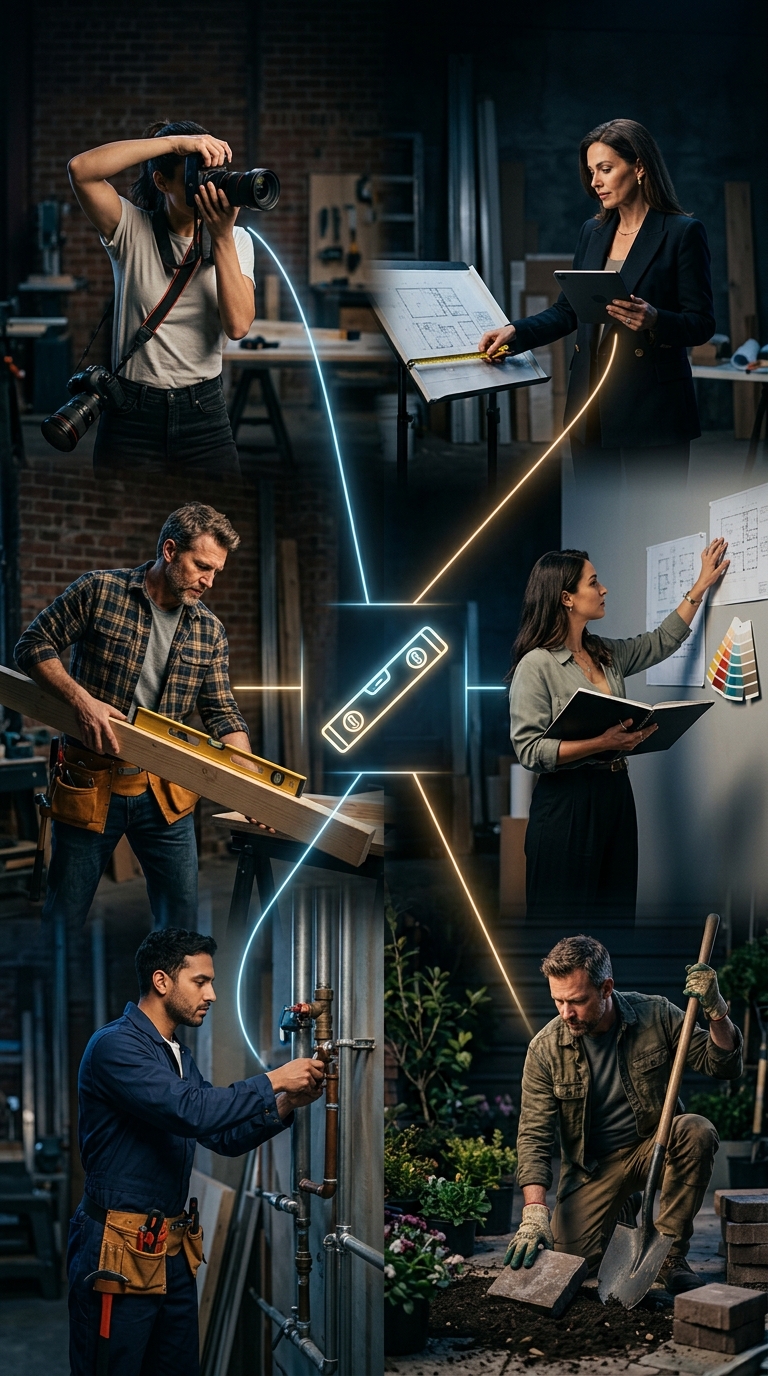
Far from being a niche construction tool, a spirit level is used across a broad range of trades, professions, and creative disciplines — each with their own precision standards and workflows.
Construction and Civil Engineering
Builders, site managers, and civil engineers use levels constantly throughout a project:
- Bricklayers check every course of bricks for plumb and level to prevent walls from leaning
- Carpenters and joiners rely on levels when framing walls, fitting staircases, and installing cabinetry
- Civil engineers use precision levels to set out foundations, drainage gradients, and retaining structures
- Concreters check formwork before a pour to ensure the finished slab meets specification
In these environments, even a small deviation compounds over the height or length of a structure. A wall that's 2mm out of plumb at floor level can be 20mm or more out by the time it reaches ceiling height.
Tiling, Flooring, and Plastering
These trades depend on level substrates before any finish work begins:
- Tilers check walls and floors for flatness and fall, adjusting adhesive beds accordingly
- Floor layers — whether working with hardwood, laminate, or vinyl — need a flat, level base to prevent movement and noise
- Plasterers use levels to set screeds and guide rules when achieving a flat, consistent skim
Plumbing and Electrical Installation
- Plumbers must pitch waste pipes at the correct gradient — typically 1:40 — to ensure proper drainage without blockages. Too steep and solids are left behind; too shallow and flow becomes sluggish. A spirit level is the primary tool for hitting that mark
- Electricians use levels when mounting consumer units, socket back boxes, and conduit runs to meet installation standards and pass inspection
Photography, Film, and Content Creation
A crooked horizon in architecture photography or an unlevel camera rig in a film production creates visual unease that audiences notice, even if they can't articulate why.
- Photographers attach spirit level accessories to tripod heads and hot shoes
- Cinematographers use levels on fluid heads and slider rigs
- Content creators and live streamers use levels when setting up lighting rigs, monitor arms, and camera positions
For this group, a digital spirit level app on a smartphone is often the most convenient option — lightweight, always available, and precise enough for professional results.
Interior Design and Architecture
A spirit level is used throughout the design and installation process to ensure that visual lines — whether a run of pendant lights, a gallery wall, or a bespoke shelving system — are precisely aligned:
- Interior designers specify exact installation heights and angles for fixtures and furniture
- Architects use levels during site visits to verify that construction meets design intent
- Shopfitters and retail display specialists rely on precise alignment to achieve the polished environments their clients expect
Landscaping and Outdoor Construction
- Landscapers use levels to ensure patios, decking, and paths have the correct fall away from buildings (typically 1:60 to 1:80)
- Fencing contractors check every post for plumb before setting in concrete
- Irrigation specialists design watering systems around accurate surface gradients
The Common Thread
Across every one of these professions, using a spirit level reflects the same principle: getting it right at the measurement stage saves time, money, and rework later. As jobs grow more complex — angled installations, non-standard gradients, compound surfaces — so does the need for a level that goes beyond a simple bubble in a vial.
Many professionals are moving toward digital tools that offer target angle mode and real-time angle measurement, giving them a single instrument capable of handling both standard leveling and custom-angle work on the same job site.
Conclusion: Why Knowing What a Spirit Level Is Used For Matters
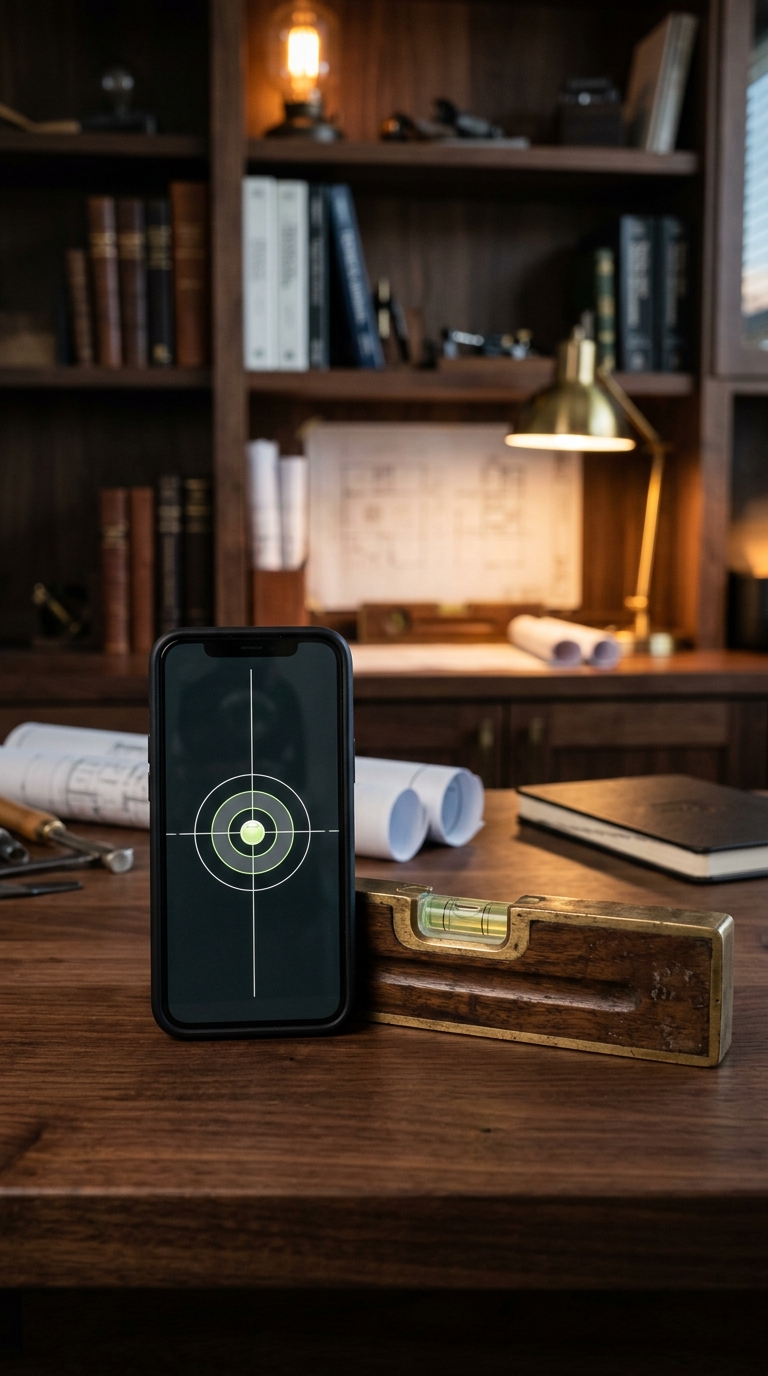
From construction sites to creative studios, from kitchen cabinet installations to professional photography rigs — a spirit level is one of those tools whose importance only becomes clear when you understand how many disciplines depend on it. Getting a surface, structure, or object precisely level or plumb isn't perfectionism for its own sake. It's about ensuring that everything built on top of that foundation — literally — holds up over time.
So, what is a spirit level used for? As this guide has shown, the answer covers almost everything that involves placing, aligning, installing, or constructing anything in the physical world:
- DIY tasks like hanging shelves, mounting TVs, and aligning picture frames
- Construction work including foundations, wall frames, window installations, and concrete pours
- Specialist trades like tiling, plumbing waste runs, and electrical conduit alignment
- Creative professions including photography, cinematography, and content creation
- Interior design and any environment where visual precision defines the quality of the result
What's changed in recent years is the form that precision takes. The traditional bubble in a vial remains a trusted benchmark, but modern digital spirit levels have extended what's possible. With features like intelligent calibration, Target Angle mode, AR Camera overlays, and Apple Watch integration, tools like LevelPro bring professional-grade accuracy to a device already in your pocket.
If you're deciding whether a dedicated level app is worth it for your work, our comparison of free vs paid level tools covers where the practical difference lies. Want to make sure your iPhone's sensors are delivering trustworthy readings before you start a project? Our guide on how to calibrate your iPhone level tool walks you through the process step by step.
Precision isn't optional — it's the foundation every good result is built on. Whether you reach for a traditional spirit level or a digital app, choosing the right tool for your workflow ensures your measurements, and everything that follows from them, are exactly right.
LevelPro: A Professional Spirit Level for iPhone & iPad
LevelPro brings the full functionality of a professional spirit level to your iPhone or iPad. Two dedicated measurement modes — Bullseye for flat surfaces and Tubular for edges and walls — cover the most common real-world leveling scenarios. The intelligent 2-step calibration system ensures your readings are accurate regardless of your device's sensor tolerances. For complex jobs, Target Angle mode lets you lock in a specific angle and receive haptic and audio feedback the moment you hit it. AR Camera mode overlays live level data on your real-world camera view, and the Apple Watch companion means you can check measurements without looking at your phone. Multiple measurement units are supported, and the Hold function freezes a reading so you can check it at your own pace. With a dark interface and neon accents, LevelPro is built for architects, engineers, photographers, builders, and anyone who needs a professional instrument. Available via subscription, which unlocks all features.
Put Accurate Measurements in Your Pocket
Whether you're a professional on a job site or a homeowner tackling a weekend project, having an accurate, reliable spirit level makes every task easier and every result cleaner. Try LevelPro on your iPhone or iPad and see what a calibrated digital spirit level can do.
Frequently Asked Questions
What is a spirit level used for in construction?
In construction, a spirit level is used to ensure walls, beams, foundations, window frames, door frames, and floor joists are either perfectly horizontal or vertical. Without accurate leveling, structural problems can compound over time, leading to costly repairs.
Can a spirit level measure angles other than 0° and 90°?
Yes. Modern digital spirit levels — including smartphone-based tools — feature a Target Angle mode that lets you set any custom angle and receive audio or haptic feedback when you hit it precisely. This is especially useful for installing ramps, staircases, or pitched roofs.
What is the difference between a bullseye level and a tubular level?
A bullseye (or circular) level shows whether a flat surface is level in all directions simultaneously, making it ideal for tables, camera platforms, and appliances. A tubular level measures level or plumb along a single axis, which suits edges, walls, and long structures better.
Is a phone app as accurate as a traditional spirit level?
A well-designed digital spirit level app with a proper calibration system can match or exceed the accuracy of many traditional bubble levels. Apps like LevelPro use a 2-step intelligent calibration process to correct for device sensor offsets, delivering professional-grade accuracy.
What trades and professions use spirit levels most often?
Spirit levels are used daily by builders, carpenters, architects, civil engineers, tilers, plumbers, electricians, photographers, interior designers, and landscapers. Any profession that involves installing, aligning, or constructing something physical benefits from having an accurate level.
Can I use a spirit level app on an Apple Watch?
Yes — some digital spirit level apps offer an Apple Watch companion, letting you view real-time level readings directly on your wrist. It's particularly useful when you need both hands on a tool or material and can't glance at your phone screen.